
Kailash Mansarovar Yatra 2027: Routes, Cost, Permits, Kora & Complete Planning Guide
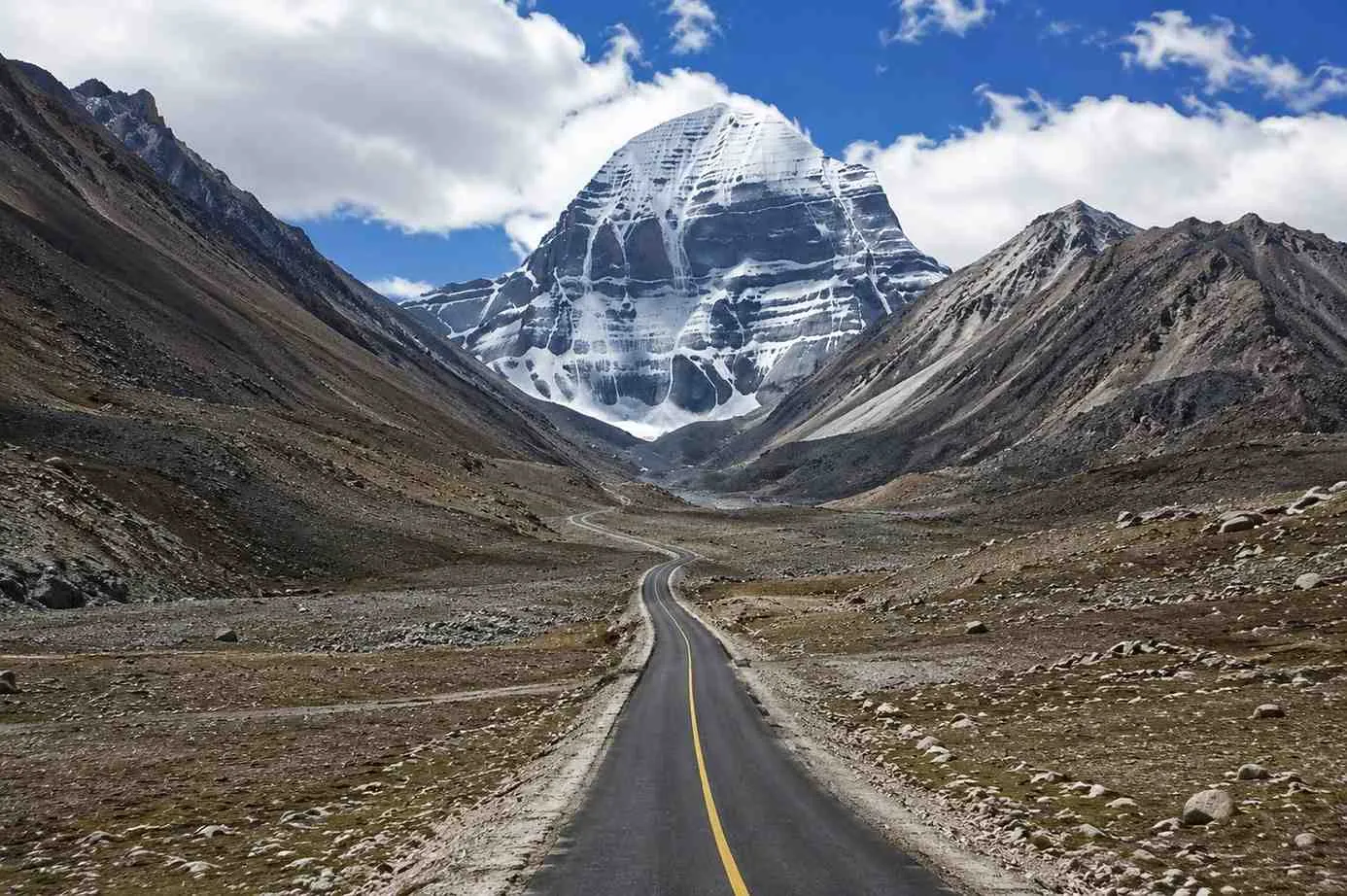
Kailash Mansarovar is a high-altitude pilgrimage region in western Tibet, centred on Mount Kailash and Lake Manasarovar. A Kailash Mansarovar Yatra is not a normal sightseeing holiday: it combines international permits, long road or air transfers, basic facilities and exposure to elevations above 5,000 metres. For anyone considering the Kailash Mansarovar Yatra 2027, the safest first step is to choose the route only after comparing acclimatisation time, passport eligibility, confirmed permits, medical fitness and a written cancellation policy.
The practical travel season is generally late spring to early autumn, but route operations depend on weather, border permissions and bilateral arrangements. The Government of India’s official 2027 dates had not been announced as of 3 September 2026. Treat private-operator departure calendars as provisional until the operator produces the required China entry visa and permits for the complete journey.
Kailash Mansarovar Yatra 2027 status: what is confirmed?
- “Registration open” can mean only that an operator is collecting names or deposits.
- “Departure confirmed” should mean minimum group size, transport and operating plan are confirmed.
- “Travel documents issued” means the required visa/entry permit approvals for your group have actually been received. This is the point that prevents a traveller being stranded en route.
In June 2026, India’s MEA warned Indian citizens travelling through private operators not to leave India until all documents for the full journey were obtained. The warning followed cases of pilgrims reaching Nepal without the documents needed to enter China. That lesson should be central to every 2027 booking decision.
What and where are Kailash Mansarovar?
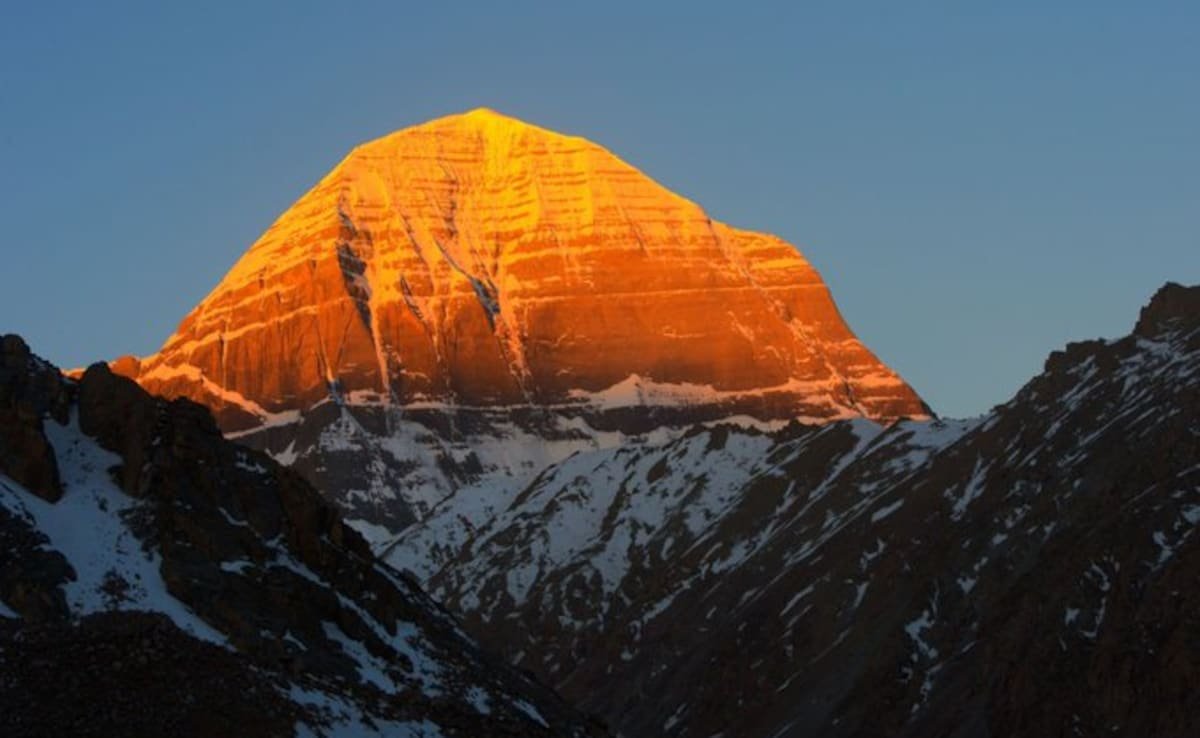
Mount Kailash is a 6,638-metre peak in the Transhimalaya of the Tibet Autonomous Region. Nearby Lake Manasarovar lies at roughly 4,590 metres. The landscape is sacred in Hindu, Buddhist, Jain and Bön traditions. Pilgrims do not climb Mount Kailash. The principal physical pilgrimage is the outer circumambulation—called parikrama or kora—around the mountain.
The outer kora is commonly described as approximately 48–52 kilometres. Published distances differ because vehicles may use different drop-off and pick-up points. Its highest crossing is Dolma La, about 5,630 metres. At that elevation, oxygen availability is far lower than at sea level, weather changes quickly and even a fit person may develop altitude illness.
Darshan may mean seeing Mount Kailash from a viewpoint or aircraft. Manasarovar visit means reaching the lake area. Outer kora means travelling around Mount Kailash, normally over three days. Aerial darshan is not the same experience as entering Tibet, visiting the lake and completing the kora.
Which Kailash Mansarovar route should you choose?
There is no single “best” route. The right route is the one that matches your passport, available days, tolerance for road travel, need for gradual acclimatisation and acceptance of weather risk.
| Route | Typical planning duration | Best suited to | Main trade-off | 2027 verification |
|---|---|---|---|---|
| MEA via Lipulekh, Uttarakhand | Official programme; historically about three weeks | Eligible Indian citizens comfortable with a demanding land journey and official selection process | Long duration, trekking/road demands and limited batches | Wait for MEA’s 2027 notification and rules |
| MEA via Nathu La, Sikkim | Official programme; historically about three weeks | Eligible Indian citizens preferring a route with more vehicle travel | Long plateau road travel and limited official seats | Wait for MEA’s 2027 notification and rules |
| Kathmandu–Kyirong overland | Usually 13–15 days | Travellers who value a steadier road-based ascent and fewer small-aircraft sectors | Long driving days, border and road disruption risk | Confirm group visa, Tibet permissions and exact border entry |
| Lucknow/Nepalgunj–Simikot–Hilsa | Usually 9–11 days | Travellers with fewer days who accept helicopter and weather uncertainty | Rapid altitude gain; small-aircraft/helicopter delays can cascade | Confirm whether the route is operating for your passport and date |
| Via Lhasa | Usually 14–16 days | Travellers seeking staged acclimatisation and Lhasa cultural stops | Higher flight/rail and programme cost; long onward drives | Confirm China visa route, Tibet permit and Indian-passport rules |
| Aerial darshan | Often 1–3 days | People unable or unwilling to undertake the land pilgrimage | No lake visit or kora; visibility and routing depend on aviation/weather permissions | Verify flight authority, actual viewing plan and refund terms |
Fastest is not automatically safest
Helicopter-assisted itineraries save time, but they can move a pilgrim from the plains to high sleeping elevations quickly. That reduces the body’s adjustment time and also exposes the programme to multiple weather-dependent sectors. Compare the number of acclimatisation nights—not only total trip days.
Official route and private route are different products
The MEA programme has its own eligibility, application, selection, medical testing, fee and batch system. A private route via Nepal or China is arranged under a different commercial and documentation process. Paying a private company is not an application to the Government of India programme.
Eligibility by passport and traveller profile
| Traveller | What to know | Action before paying |
|---|---|---|
| Indian citizen seeking MEA route | The current KMY portal states that applicants must be Indian citizens with valid Indian passports and meet the notified age, BMI and medical-fitness rules. Rules must be rechecked for 2027. | Use only the official portal when applications open; do not pay an agent for “lottery selection.” |
| Indian citizen using a private Nepal route | A passport is needed for entry into China/Tibet even though Indians can normally enter Nepal with certain other IDs. Group travel documents and restricted-area permissions apply. | Obtain written proof of the operator’s registration/authorisation and the document-issuance process. |
| OCI holder | OCI is not Indian citizenship and route eligibility may differ from Indian-passport rules. | Send the operator the exact passport nationality and OCI status; get written route approval. |
| Foreign passport holder | Visa, group composition, permit lead time and price may vary by nationality. Some nationalities may face extra processing. | Do not rely on a generic “international traveller” price; obtain nationality-specific confirmation. |
| Senior traveller or person with a condition | Age alone does not predict altitude illness. Heart, lung, neurological, blood-pressure, sleep and mobility issues require individual medical assessment. | Share the day-by-day altitude profile with a doctor experienced in travel or high-altitude medicine. |
The official portal’s published eligibility has included age 18–70 and BMI 25 or below. Do not apply those limits automatically to every private route, and do not assume a private operator’s acceptance equals medical clearance.
Best time for Kailash Mansarovar Yatra 2027
The normal planning window is approximately May to September. Border opening, snowfall, road condition, monsoon effects in Nepal, plateau weather and permit policy can shorten it. Choose a month based on the complete route, not only the weather at Lake Manasarovar.
| Period | Likely advantages | Likely constraints |
|---|---|---|
| May | Early-season departures and clearer pre-monsoon periods may be available | Cold nights, residual snow and route-opening uncertainty |
| June | Core pilgrimage season; long daylight | Strong sun/UV, cold at night and growing weather variability |
| July–August | Many scheduled groups; comparatively milder daytime temperatures | Monsoon disruption on Nepal sectors, clouds, landslides and flight delays |
| September | Post-monsoon visibility can improve | Temperatures fall, daylight shortens and the operating window may close |
Full-moon or festival-labelled departures can be meaningful, but no operator can guarantee a particular night at the lake when weather, border processing or transport causes delay. Ask whether the date carries a surcharge and whether the itinerary has a buffer day.
How much does Kailash Mansarovar Yatra 2027 cost?
A useful quote is more important than a headline price. The total varies by route, passport, group size, room sharing, exchange rate, permit charges, domestic connections, kora assistance and tax treatment. Until a 2027 programme is formally confirmed, any figure is a planning estimate—not a guaranteed final price.
Package price + home-city travel + visa/permit charges not included + medical tests + insurance + GST/TCS or other applicable taxes + single-room supplement + pony/porter + tips + meals excluded + extra hotel/transport during delays + personal equipment.
Demand an itemised price sheet
- Currency and exchange-rate date; who absorbs a later currency increase.
- Price for Indian, Nepali/OCI and other passport holders, where different.
- Room basis in each place: twin, triple, dormitory, guesthouse or tent.
- All flights and helicopters listed sector by sector.
- All permit, visa, monument, lake and kora entry charges.
- Pony, porter, duffel transport and palki/doli—each shown separately.
- Meals by day, including breakfast on early departures and meals during delays.
- Oxygen availability, medical staff and evacuation coordination.
- GST shown as included or additional. Ask for a tax invoice.
- TCS, if applicable, shown separately at the legally current rate with credit documentation; tax rules can change before travel.
Low-price warning: a quote is not comparable if one includes a group visa, Tibet fees, internal flights and meals while another excludes them. Compare identical inclusions and the same cancellation risk.
Passport, visa and permit checklist
Kailash Mansarovar is in a restricted region. Independent travel is not the normal option. The operator or official programme coordinates group approvals, but the traveller remains responsible for submitting correct documents and verifying that approvals exist.
Before booking
- Passport nationality, expiry date and sufficient blank pages.
- Name, date of birth and passport number exactly matching all forms and tickets.
- Written confirmation that your nationality is accepted on the selected route.
- Operator’s legal business name, registration details, office address and emergency contact.
- Expected permit submission date and the last safe date to issue international tickets.
Before leaving India or your home country
- Actual visa/entry document status—not a screenshot of an application.
- Required Tibet/restricted-area approvals for every sector.
- Confirmed group list and exact spelling of your name.
- Confirmed flights/vehicles and the land-border checkpoint.
- Printed and offline copies of passport, insurance, emergency contacts and itinerary.
Do not accept “come to Kathmandu and the permit will probably arrive.” Ask the operator to state in writing whether all documents needed to enter China and complete the trip have been issued. The 2026 MEA advisory specifically warned against travelling in anticipation of later approval.
Practical 14-day overland itinerary via Kathmandu and Kyirong
This sample explains the travel rhythm; it is not a promised 2027 departure. Road, border and accommodation points may change. A safety-minded itinerary protects acclimatisation time rather than compressing the trip merely to advertise fewer days.
- Day 1 — Kathmandu arrival: document check, briefing, equipment inspection and rest.
- Day 2 — Kathmandu: contingency/document day; optional local pilgrimage visits only if they do not reduce rest.
- Day 3 — Drive toward the Nepal–Tibet border: expect road checks and possible delay.
- Day 4 — Border formalities and Kyirong area: enter as a group; take the first high-altitude night quietly.
- Day 5 — Acclimatisation: short, gentle walk; hydration and symptom monitoring. Do not turn this into strenuous sightseeing.
- Day 6 — Drive to Saga: long plateau travel; protect against sun, dust and dehydration.
- Day 7 — Saga to Lake Manasarovar: first lake darshan if conditions permit; avoid exertion immediately after arrival.
- Day 8 — Manasarovar area to Darchen: controlled lake visit/puja subject to local rules; kora readiness check.
- Day 9 — Kora day 1 to Dirapuk: gradual walking, pony management and north-face views when weather permits.
- Day 10 — Kora day 2 over Dolma La to Zutulpuk: the highest and hardest day; early start; descend promptly after the pass.
- Day 11 — Kora day 3 and return to Darchen/Saga: complete the final walking section; regroup before the drive.
- Day 12 — Return toward Kyirong: long drive and changing road conditions.
- Day 13 — Border crossing and return to Kathmandu: allow time for immigration and traffic.
- Day 14 — Departure: use a flexible/changeable onward ticket or retain an extra hotel night.
Build in a buffer: do not schedule an important event, non-refundable international connection or immediate work commitment the day after the advertised return. Helicopter and border routes can overrun.
Mount Kailash parikrama: the three kora stages
| Stage | Approximate walking | What makes it difficult | Decision point |
|---|---|---|---|
| Day 1: Yam Dwar/Tarboche side to Dirapuk | Often about 12–15 km | First sustained high-altitude effort; uneven trail and wind | Report headache, nausea, unusual fatigue or imbalance early |
| Day 2: Dirapuk–Dolma La–Zutulpuk | Often about 20–24 km | Steep ascent to roughly 5,630 m, possible snow/ice, then a long descent | Guide/medical staff can turn a pilgrim back or arrange descent; the pass is not a place to linger |
| Day 3: Zutulpuk to road pickup | Often about 8–12 km | Accumulated fatigue, river/trail conditions and final road transfer | Stay with the group; do not rush because the terrain looks easier |
Distances are approximate and route operations change. Completing less walking does not reduce the altitude. A pony can reduce muscular effort but cannot prevent AMS, HAPE or HACE.
If you cannot or choose not to do the kora
Ask before booking whether you may remain at Darchen, who stays with you, what accommodation/meals are provided and whether any cost is refunded. Deciding to stop is not failure. Turning around early can prevent a manageable problem becoming an evacuation.
Pony, porter and palki support: what nobody should leave vague
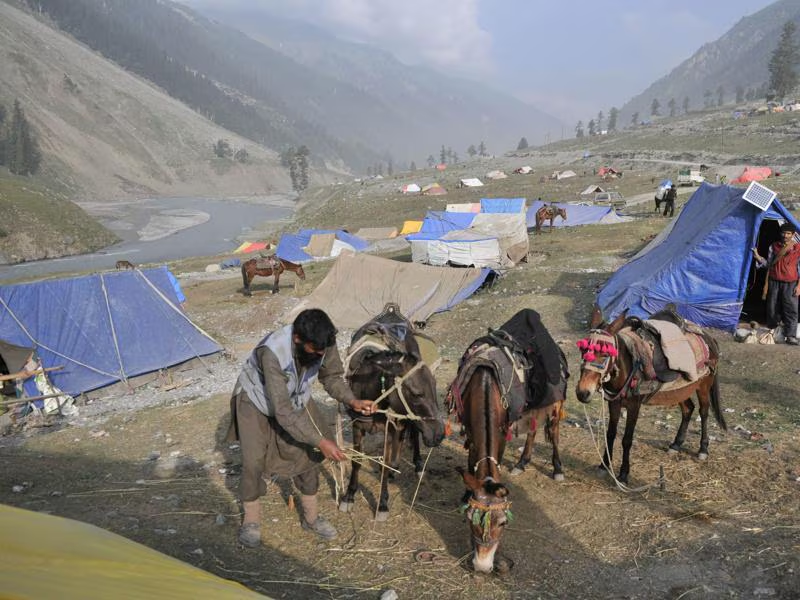
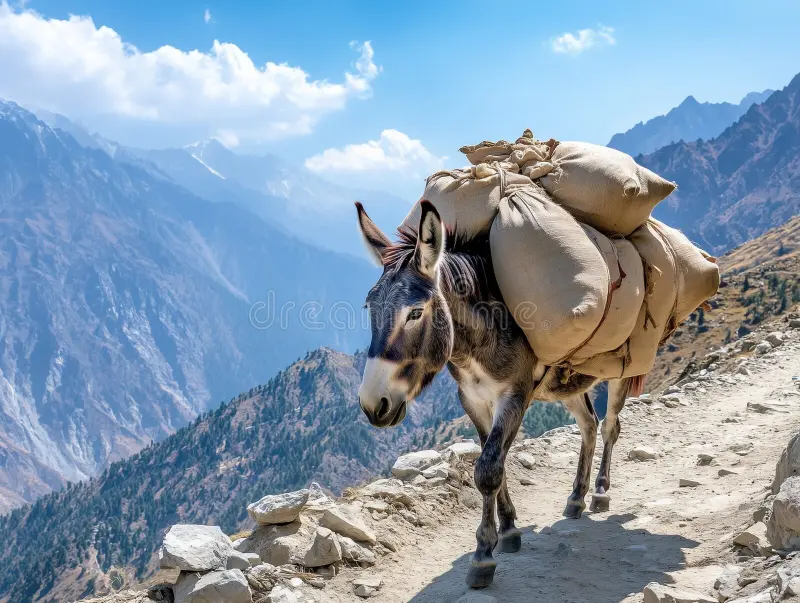
Support arrangements are operational services, not a medical guarantee. Availability, rate, rider weight limits, allocation point and refund conditions can change. On the official portal, pony and porter hiring for the Kailash parikrama is described as a decision made at Purang; private routes may use a different process.
Eight questions to ask about pony service
- Is the price for one day or the complete kora?
- Does it include the animal handler and any local fee?
- What is the baggage and rider weight limit?
- At which point is the animal assigned, and can supply run out?
- Which stretches must the rider walk?
- What happens if the animal, handler or border route is unavailable?
- Is any amount refundable if the pilgrim stops for medical reasons?
- Who communicates with local handlers if there is a dispute?
Wear footwear suitable for walking even if you pre-book a pony. Keep medicines, passport, water, insulation and rain protection on your body or in a small daypack—not only with a porter who may be ahead or behind.
Altitude, medical fitness and the rule that saves lives
Fitness helps you walk, but it does not make you immune to altitude illness. The CDC notes that individual susceptibility and ascent rate are major determinants; physical training does not reliably predict who will get AMS. Above 3,000 metres, conservative guidance is to limit sleeping-altitude gain and add acclimatisation time. Many Kailash itineraries cannot perfectly follow low-risk ascent profiles, which makes symptom recognition and a descent plan essential.
New headache plus nausea, dizziness, unusual fatigue or poor sleep after ascent can indicate acute mountain sickness. Confusion, inability to walk a straight line, severe breathlessness at rest, persistent cough, chest tightness or blue/grey lips are emergency warning signs. Stop ascent, alert the guide/medical lead and descend as directed. Oxygen may help temporarily; it does not replace evacuation or descent when severe illness is suspected.
Medical review before you book
Give your doctor the route’s day-by-day sleeping altitudes and highest point. Discuss heart or lung disease, uncontrolled blood pressure, previous stroke, seizures, clotting history, diabetes, kidney disease, severe anaemia, sleep apnoea, pregnancy, recent surgery, psychiatric medication and any past altitude reaction. Do not start acetazolamide, steroids or prescription pain medicine from a generic packing list; suitability and dose are individual medical decisions.
A sensible eight-week preparation plan
- Weeks 1–2: establish regular walking and obtain medical advice before increasing intensity.
- Weeks 3–4: add stairs or gentle inclines, balance work and light strength training.
- Weeks 5–6: practise consecutive walking days with the shoes and daypack you will use.
- Week 7: complete a comfortable longer walk; fix blisters, knee pain or equipment problems.
- Week 8: taper, sleep well and avoid exhausting “last-minute” workouts.
Training is for endurance and mobility, not altitude immunity. During the yatra, walk slowly enough to speak in short sentences, drink regularly without forcing excessive water, avoid alcohol, keep warm and report symptoms honestly.
What the operator’s emergency plan should state
- Who has first-aid/high-altitude training and who makes the turn-back decision.
- Oxygen cylinder/concentrator type, quantity, flow capability and resupply plan.
- Pulse oximeter use as supporting data—not as the only decision tool.
- Nearest road access and medical facility at every overnight stop.
- Evacuation method, payer, insurer contact and satellite/phone communication.
- How a sick traveller is accompanied if the main group continues.
Accommodation, toilets, food, water, network and electricity
Privacy and menstrual needs
Ask in advance about room sharing, female staff, toilet access during long drives and safe disposal of menstrual products. Carry more supplies than the exact trip length because delay days are common. A sealable hygiene pouch, unscented wipes and a long outer layer can make basic facilities easier to manage.
Cash and payments
Remote pony/porter services, tips and small purchases may be cash-only. Ask the operator which currency and denomination are accepted, how much may legally be carried and whether receipts are issued. Do not rely on UPI or international cards on the plateau.
Kailash Mansarovar packing list: carry less, protect the essentials
Keep in your daypack
- Passport and required travel papers in a waterproof pouch.
- Prescribed medicines plus one delay-day reserve as advised by your clinician.
- Insulated jacket, waterproof shell, warm hat and gloves.
- Water, compact snacks and oral rehydration product if medically suitable.
- Sunglasses with strong UV protection, sunscreen and lip balm.
- Headlamp, power bank, emergency contacts and some approved cash.
- Toilet paper, sanitiser, waste bags and personal hygiene supplies.
Wear a layered system
Use a moisture-managing base layer, insulating mid-layer and wind/water-resistant outer shell. Add or remove layers before you sweat or chill. Cotton dries slowly; test socks and clothing on long walks before departure.
Footwear and walking aids
Use broken-in walking/trekking shoes with dependable grip and enough toe room for descents. Pack blister care and spare laces. Trekking poles can improve balance but should be practised before the trip. Even pony riders need walking-capable footwear.
Do not pack blindly
Ask for the latest baggage allowance for every flight, helicopter and border sector. A large airline allowance does not override a small-aircraft or porter limit. Keep prohibited medicines, drones, satellite devices, religious literature, maps or professional camera equipment out unless the operator has confirmed current border rules in writing.
Travel insurance: the wording matters more than the logo
Many standard policies exclude high-altitude trekking, remote evacuation or travel in restricted regions. Obtain written confirmation that the policy covers your nationality, age, route, China/Tibet, the maximum kora elevation (about 5,630 m), medical treatment, ground/air evacuation and repatriation.
Also check permit denial, border closure, weather delay, missed connection, trip interruption, pre-existing conditions and unused accommodation. “Adventure covered” without an altitude limit in the policy schedule is not enough. Save the assistance number offline and give a copy to a family member.
Before paying: 24-point Kailash Yatra booking checklist
- Is this the official MEA programme or a private commercial tour?
- What is the exact route, border point and final start/end city?
- Is the date confirmed, provisional or only open for interest registration?
- Which passport nationalities are accepted?
- Who is the contracting company named on the invoice?
- Is the operator registered and authorised for this route?
- Which Chinese visa/entry and Tibet permits are required?
- When will each document be issued?
- What payment is due before permit approval?
- What is refunded if a permit is denied?
- What is refunded if the group size is not reached?
- What happens if the border or route closes?
- Which flight/helicopter delays are included at no cost?
- After how many delay nights does the traveller begin paying?
- Can the return ticket be changed without a very high charge?
- How many acclimatisation nights occur before Manasarovar and kora?
- What is the maximum sleeping altitude each day?
- What medical staff, oxygen and evacuation system accompany the group?
- What accommodation and toilets exist at each overnight point?
- Are all meals vegetarian, and can allergies be managed safely?
- Are pony and porter costs included, guaranteed or payable locally?
- Can a non-kora traveller remain at Darchen with support?
- Are GST, TCS and exchange-rate adjustments included?
- What is the written cancellation/refund timeline and payment destination?
Pay only to the legal company account or a traceable payment gateway named on the invoice. Avoid splitting large payments among personal accounts. Keep the brochure version, itinerary, invoice, terms, receipts and all written assurances together.
Common claims that need a reality check
| Claim | What it really means |
|---|---|
| “Helicopter route is easy” | It reduces road/walking time but can increase weather disruption and rapid-ascent risk. |
| “Pony means no walking” | Some stretches may require walking; riding itself needs balance and does not prevent altitude illness. |
| “Fit people do not get AMS” | Fitness improves endurance, not immunity from altitude illness. |
| “Oxygen makes the route safe” | Oxygen is a support tool. Severe symptoms require urgent assessment and often descent/evacuation. |
| “Full moon at Manasarovar guaranteed” | Transport, permits and weather can shift the actual location on a particular night. |
| “Registration confirms the yatra” | Registration, operational confirmation and document issuance are separate stages. |
| “All-inclusive” | Only the itemised written inclusion list defines what is included. |
Kailash Mansarovar Yatra 2027 FAQs
Is Kailash Mansarovar Yatra open in 2027?
When will Kailash Mansarovar Yatra 2027 registration start?
What is the best month for Kailash Mansarovar?
How many days are required for Kailash Mansarovar Yatra?
How much will Kailash Mansarovar Yatra 2027 cost?
Is a passport compulsory for Kailash Mansarovar Yatra?
Can I travel to Kailash Mansarovar alone?
Is Kailash Mansarovar Yatra difficult?
What is the altitude of Mount Kailash and Lake Manasarovar?
Can senior citizens do Kailash Yatra?
Does a pony complete the entire Kailash parikrama?
Is palki or doli available at Mount Kailash?
Can I visit Lake Manasarovar without doing the kora?
Does travel insurance cover Kailash Yatra?
What documents must be confirmed before travelling through Nepal?
What happens if I develop altitude sickness?
Sources and verification policy
This guide separates official facts from planning guidance. Time-sensitive dates, route permissions, prices, taxes and eligibility should be rechecked before payment and again before departure.
- Kailash Manasarovar Yatra portal, Ministry of External Affairs — official India route, eligibility, application, fee and FAQ information.
- MEA: Launching of Kailash Manasarovar Yatra 2026 — most recent annual programme available when this page was verified.
- MEA advisory for Indian citizens travelling through private tour operators — document and operator-verification warning issued in June 2026.
- CDC Yellow Book: High-altitude travel and altitude illness — acclimatisation, symptoms and medical guidance.
- CBIC GST rates and current Income Tax Department guidance — verify tax treatment on the invoice date.
Medical note: This page provides general travel-planning information, not diagnosis or personal medical advice. Seek route-specific advice from a qualified clinician.